
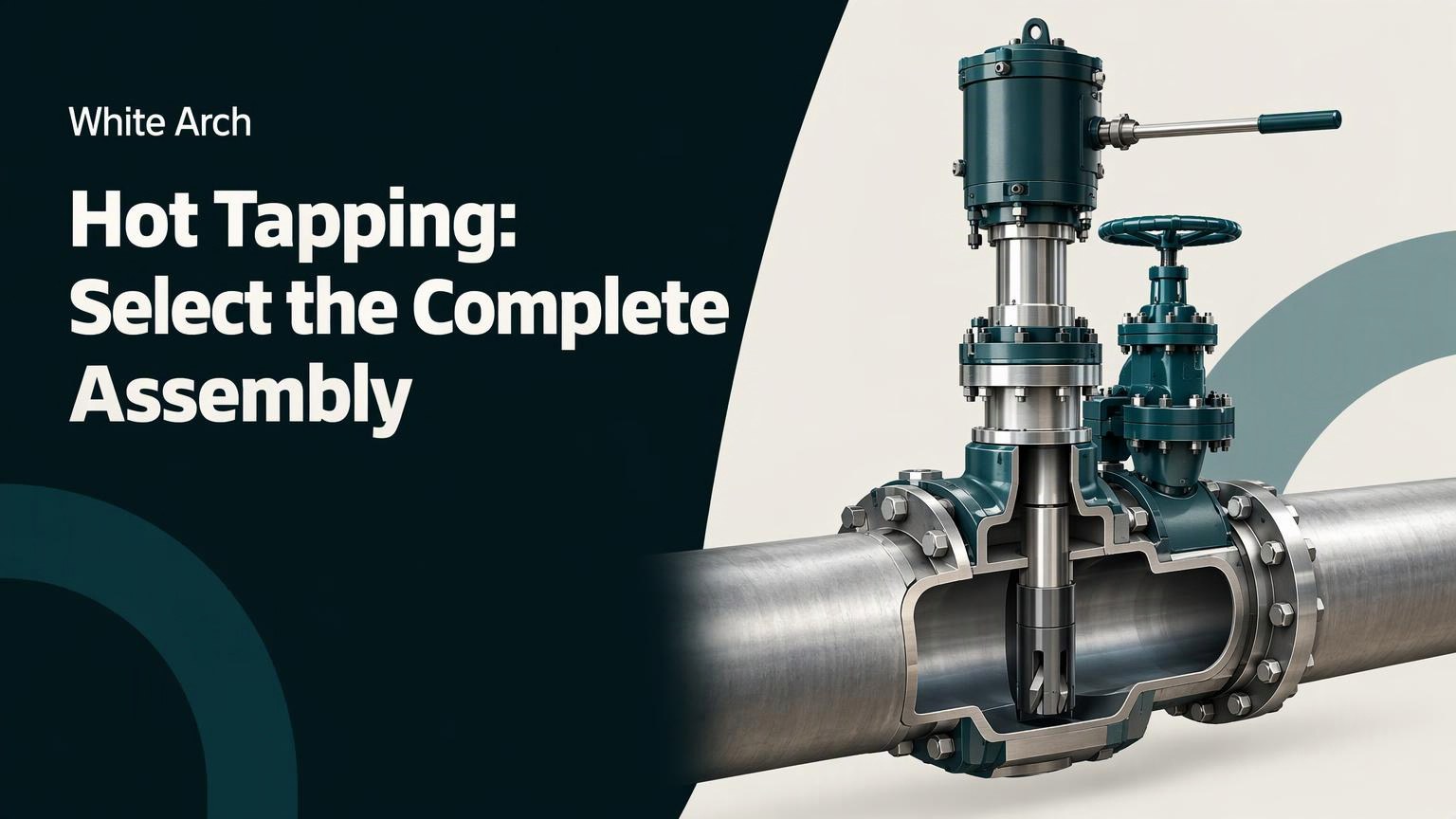
A hot tapping machine is the powered cutting tool that makes a new branch on a pipe while the line stays pressurized and in service. It works as part of a four-part equipment chain: a fitting attached to the live pipe, a full-bore isolation valve, the cutting machine, and the completion hardware that seals the tap. The machine drives a hole saw and pilot drill through the pipe wall inside a sealed chamber, retains the cut section so nothing enters the flow, then withdraws behind the closed valve. This lets operators add connections without a shutdown.
What a hot tapping machine is
A hot tapping machine is the powered cutting tool that makes a new connection on a pipe while the line stays pressurized and in service. The hot tapping machine bolts onto an isolation valve, drives a hole saw through the pipe wall inside a sealed pressure chamber, and captures the cut section so nothing falls into the flow. Because the pipe is never drained or shut down, every hot tapping machine is matched to the pipe size, pressure, temperature and contents before any cutting begins, and the whole assembly is pressure tested first.
The hot tapping machine is only one link in a four-part equipment chain: the fitting attached to the live pipe, the full-bore isolation valve, the hot tapping machine itself, and the completion hardware that seals the tap. White Arch selects and coordinates this full chain for shutdown-free connections across industrial, utility and critical facilities in the Kingdom, and reviews the wider live-line scope on the White Arch solutions page. The sections below walk through each part in the order it is used on site, and explain where split tees and hot tapping fittings fit.
The equipment chain, step by step
A live connection is made with four groups of equipment, used in sequence. The described diagram below shows the stack assembled on the pipe, from the live main at the bottom to the finished branch at the top.
LIVE PIPE (pressurized)
      |
  [1] FITTING  (split tee)
      |
  [2] VALVE    (isolation)
      |
  [3] MACHINE  (cutter)
      |
  [4] COMPLETION (plug)
Read from bottom to top, the fitting is attached to the pipe first, the isolation valve is bolted to the fitting, the cutting machine is bolted to the open valve, and the completion hardware finishes the connection after the machine is removed. Each stage is independently pressure tested so that the pipe wall is only ever cut once the chamber above it can safely hold the line pressure.
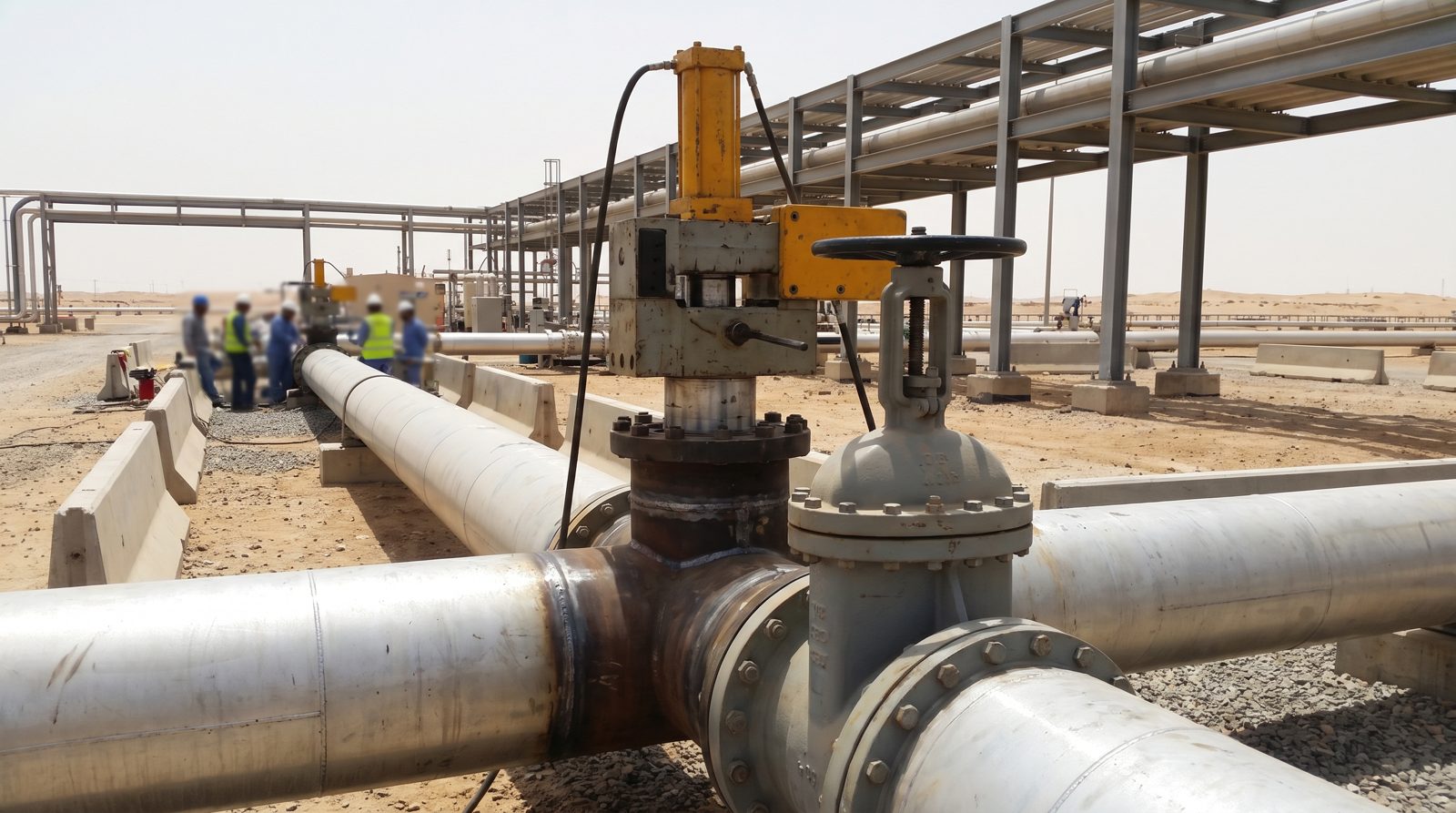
Stage one: the fitting and the split tee
The fitting is the component attached directly to the live pipe, and it carries the branch outlet. There are three common types, chosen by pipe material, pressure and whether welding is acceptable:
- Welded branch fitting: a reinforced outlet or nozzle welded onto a steel pipe under an in-service welding procedure. It suits steel process and utility lines where qualified hot work is allowed.
- Split tee: a full-encirclement, two-piece tee that wraps the pipe and provides a branch outlet. A split tee fitting is bolted and seal-welded around the running pipe, which spreads the branch load into the main and is the standard choice for larger-diameter or higher-pressure connections.
- Bolted split sleeve: a mechanical, gasketed fitting used where welding is not appropriate, for example on some cast iron, ductile iron or coated lines.
Split tees are common in oil and gas, water transmission and firewater systems because they add a branch without removing pipe or stopping flow. A split tee fitting also reinforces the main at the branch, which matters when the connection is close to the pipe's rated pressure. Hot tapping fittings are always rated to at least the design pressure and temperature class of the pipe they are installed on.
Stage two: the isolation valve
Once the fitting is in place and pressure tested, a full-bore isolation valve is bolted to its flange. The valve must be full-bore, meaning its open diameter is at least as large as the hole that will be cut, so the cutter can pass through without touching the seat. A gate valve or a full-port ball valve is typical. This valve is the single most important safety component in the chain: after the cut is made and the machine is withdrawn, closing this valve is what holds back the line pressure and allows the machine to be removed. It usually stays in place as the permanent branch isolation valve.
Stage three: the tapping machine and cutter
The tapping machine bolts to the open isolation valve and carries the cutting assembly on a sealed, extendable boring bar. The cutter is a cylindrical hole saw, and at its center is a pilot drill fitted with a coupon retainer. The pilot drill cuts first and grips the disc of pipe wall, called the coupon, so that when the hole saw finishes the cut the coupon is pulled back with the cutter instead of dropping into the flow. The machine advances under hand or hydraulic feed, cuts the full circle, then retracts the cutter and coupon up above the valve. The isolation valve is then closed, the chamber between the valve and machine is bled down, and the hot tapping machine is unbolted and removed. At this point the pipe has a new live branch sealed behind the closed valve.

Stage four: completion and line stopping
For a simple branch connection, the closed isolation valve is the completion: the new pipework is connected to the valve outlet and the branch is commissioned. Where the valve itself must later be removed, or where a section of the running line has to be isolated for modification, additional completion equipment is used. A plugging machine sets a completion plug inside a completion fitting, which allows the temporary valve to be taken off and a blind flange fitted. Line stopping goes a step further: a plugging head is inserted through a second tap to block flow inside the pipe, usually with a bypass installed between two taps so the system keeps running while the isolated section is worked on. These are the same equipment families in different arrangements, which is why the fitting selection at stage one often anticipates the completion method.
Hot tapping versus cold tapping
Cold tapping is the same mechanical cutting operation performed on a pipe that has already been drained, depressurized and isolated. It is simpler because there is no live pressure to contain, but it requires a shutdown and the downtime, draining and refilling that come with it. Hot tapping keeps the system live, so it is selected when a shutdown would stop production, cut cooling to a building that never closes, or take a firewater ring main out of service. The equipment described here, the fitting, valve, machine and completion, is what makes the live operation possible, and the difference between the two methods is whether the line is in service, not the tools themselves.
Where live-line connections are used
Live-line connections on a hot tapping water line or process line are common wherever continuous operation has a high cost:
- Oil and gas and petrochemical plants, where process units cannot be depressurized between planned turnarounds and new tie-ins must wait otherwise.
- Water transmission and distribution, where a hot tapping water line connection adds a new service or meter without interrupting supply to downstream users.
- Firewater and chilled-water systems, where a ring main or header must stay live to protect or cool an occupied facility.
- Data centers, hospitals and critical facilities, where the utility simply cannot be taken offline.
White Arch delivers these connections from Dammam with Kingdom-wide mobilization, and the full range of mechanical and specialist scopes is listed on the White Arch services page. The facility types served are set out on the markets page.