
The main circuit breaker types used in commercial buildings are the MCB (miniature circuit breaker), MCCB (molded case circuit breaker), ACB (air circuit breaker), RCCB (residual current circuit breaker) and RCBO (residual current breaker with overcurrent). MCBs, MCCBs and ACBs protect against overload and short circuit at rising current ratings and breaking capacities, from final circuits up to the main low voltage incomer. RCCBs and RCBOs add earth leakage protection, with the RCBO combining overcurrent and residual current protection in one device. The correct selection follows from the prospective short circuit current, the load and the earthing system, not from brand.
The main circuit breaker types in a commercial installation
Circuit breaker types are classified by their construction, current rating, interrupting (breaking) capacity and the kind of fault they protect against. In a commercial building the circuit breaker types most engineers specify are the MCB, MCCB, ACB, RCCB and RCBO, each sitting at a different point in the distribution system from the final circuit up to the main low voltage panel. Choosing between these circuit breaker types is not a matter of brand preference: it follows from the prospective short circuit current at the board, the connected load, the earthing arrangement and the level of personnel and fire protection the application demands. White Arch specifies, installs and tests all five circuit breaker types on commercial and industrial electrical and MEP distribution boards across Saudi Arabia.
The circuit breaker types covered in this guide split cleanly by function. MCBs, MCCBs and ACBs are overcurrent devices that protect conductors and equipment from overload and short circuit, while RCCBs and RCBOs add residual current, or earth leakage, protection to guard people and reduce fire risk. Reading each of the circuit breaker types against its product standard, current rating and breaking capacity is the fastest way to select the right device for each position on a board. The sections below define each device, compare them in a single table and give a practical selection guide for commercial and industrial boards, drawing on the low voltage power and distribution scope White Arch delivers.
What each device does
MCB: miniature circuit breaker
The MCB is the smallest overcurrent device, built to IEC 60898-1 for household and similar fixed installations, and to IEC 60947-2 when used in industrial switchgear. It protects final circuits such as lighting, small power and socket outlets against overload and short circuit using a thermal element for slow overloads and a magnetic element for fast short circuits. MCBs are selected by trip curve: type B trips at roughly three to five times rated current for resistive and lighting loads, type C at five to ten times for mixed and small motor loads, and type D at ten to twenty times for high inrush equipment such as transformers.
MCCB: molded case circuit breaker
The MCCB is a larger overcurrent device built to IEC 60947-2, housed in a molded insulating case, and used for sub-main feeders, motor circuits and distribution boards where the current rating or fault level exceeds what an MCB can handle. Many MCCBs offer adjustable thermal and magnetic settings, and larger frames carry electronic trip units with adjustable long-time, short-time, instantaneous and sometimes ground-fault protection. This adjustability lets an engineer grade an MCCB against upstream and downstream devices for discrimination.
ACB: air circuit breaker
The ACB is the largest low voltage device, also built to IEC 60947-2, used at the main incomer of a main distribution board, on bus-tie positions and on large feeders. Air circuit breakers are usually withdrawable for maintenance, carry advanced electronic trip and metering units, and provide the high breaking capacity and short-time withstand that a main low voltage panel needs. Their adjustable protection and communication features make them central to the main switchboard and to power management.
RCCB and RCBO: earth leakage protection
An RCCB (residual current circuit breaker), built to IEC 61008-1, detects the small residual current that flows to earth during an insulation fault or contact with a live part, and disconnects the circuit. It does not provide overload or short circuit protection on its own, so it must be installed in series with an MCB or fuse. An RCBO (residual current breaker with overcurrent), built to IEC 61009-1, combines the functions of an RCCB and an MCB in a single device, giving overload, short circuit and earth leakage protection on one final circuit. Residual devices are specified by sensitivity, commonly 30 mA for personnel protection and 100 or 300 mA for fire protection, and by type (AC, A, F or B) according to the waveform of the leakage current the load can produce.
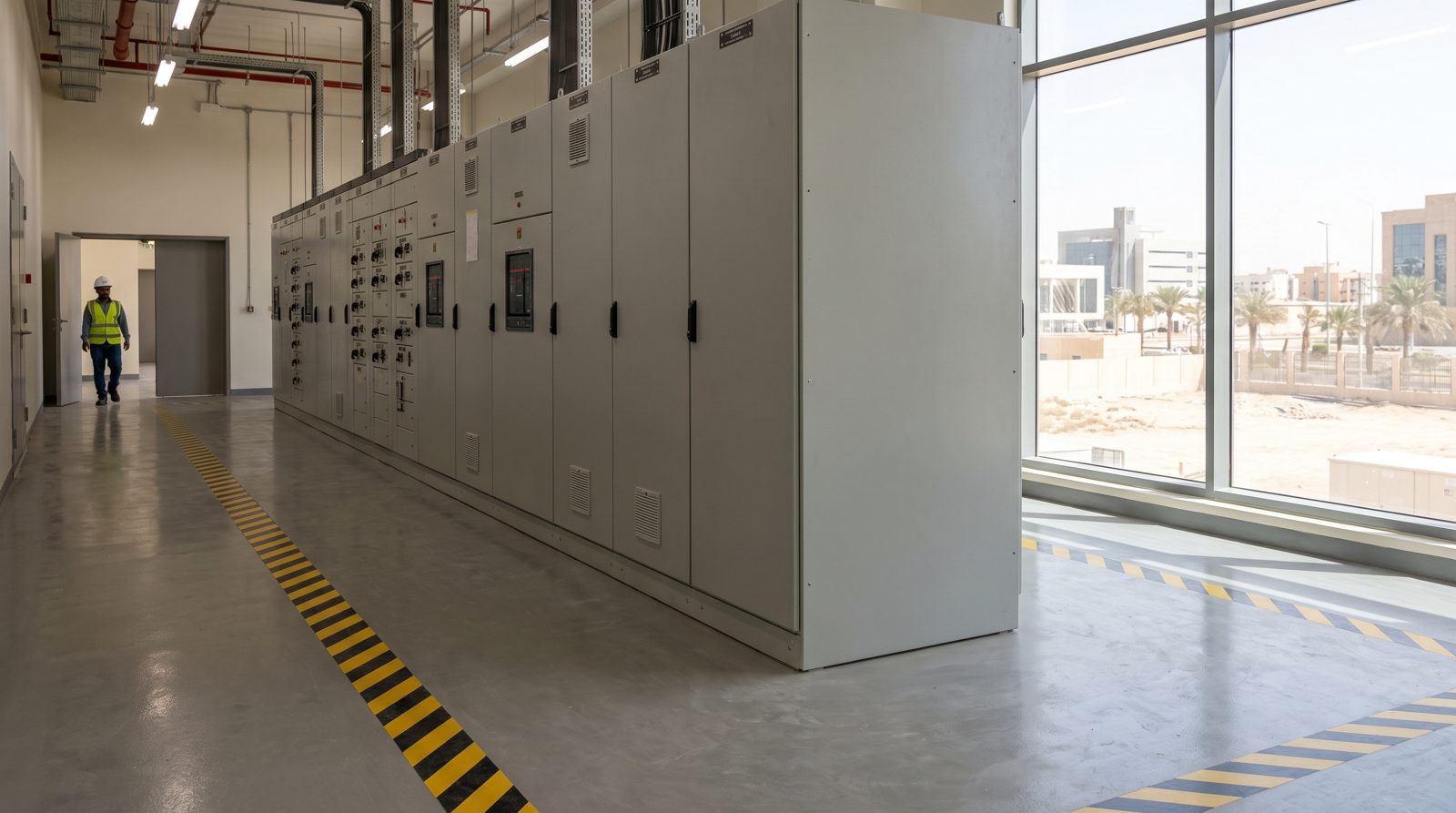
Circuit breaker types compared
The table below compares the five circuit breaker types by rating, typical breaking capacity and typical use. Breaking capacity is the highest fault current a device can interrupt safely; under IEC 60947-2 it is stated as the rated ultimate value (Icu) and the rated service value (Ics), while IEC 60898-1 states it as Icn. All values are indicative and must be confirmed against the manufacturer data and the project short circuit study.
| Device | Standard | Typical current rating | Typical breaking capacity | Typical use |
|---|---|---|---|---|
| MCB | IEC 60898-1 | Up to about 125 A | About 6 to 10 kA (Icn) | Final circuits: lighting, small power, socket outlets |
| MCCB | IEC 60947-2 | About 16 to 1600 A (frames to 3200 A) | About 16 to 100 kA (Icu) | Sub-main feeders, motor and large loads, sub distribution boards |
| ACB | IEC 60947-2 | About 630 to 6300 A | About 50 to 150 kA (Icu) | Main low voltage incomer, bus-tie, large feeders |
| RCCB | IEC 61008-1 | Up to about 125 A | Requires backup overcurrent device | Earth leakage protection in series with an MCB or fuse |
| RCBO | IEC 61009-1 | Up to about 125 A (commonly 63 A or less) | About 6 to 10 kA | Final circuits needing overcurrent and earth leakage in one device |
The pattern across the circuit breaker types is consistent: current rating and breaking capacity rise from the MCB on a final circuit, through the MCCB on feeders, to the ACB at the main incomer, while the RCCB and RCBO handle the separate job of earth leakage.
RCCB vs RCBO and MCCB vs MCB
Two comparisons come up on almost every commercial board. RCCB vs RCBO is a question of integration: an RCCB protects a group of circuits against earth leakage from one point but gives no overcurrent protection, so a fault on any circuit in the group trips the whole group. An RCBO protects a single final circuit with both overcurrent and earth leakage, so a fault isolates only that circuit, which improves continuity of supply in occupied buildings. The trade is more devices and board space against better selectivity.
MCCB vs MCB is a question of scale and adjustability. An MCB is fixed, compact and suited to final circuits up to about 125 A at modest fault levels. An MCCB handles higher currents and fault levels and, crucially, offers adjustable settings that let an engineer coordinate it with upstream and downstream devices. Where fault levels are high, as they often are close to a large transformer, an MCCB or ACB with an adequate Icu is required and an MCB alone is not suitable. ACB vs MCCB then follows the same logic at the top of the board: the ACB is chosen at the main incomer for its higher breaking capacity, short-time withstand and withdrawable maintenance.
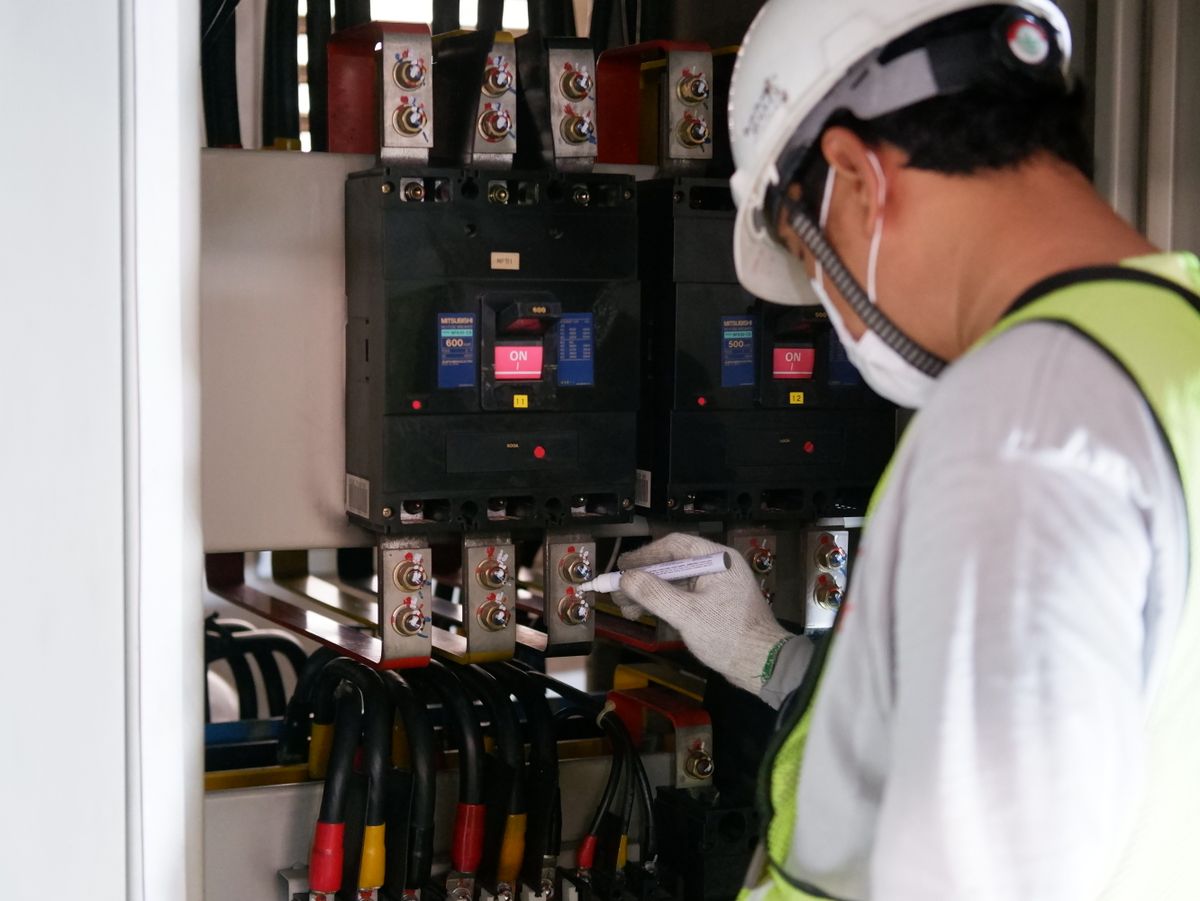
Selection guide for commercial and industrial boards
Selecting devices for a distribution board is a top-down exercise that starts from the short circuit study and the single line diagram. The steps below set out how White Arch approaches a commercial or industrial board.
- Establish the fault levels. Calculate the prospective short circuit current at each board from the transformer and upstream impedance. Every device must have a rated breaking capacity (Icu, or Icn for an MCB) at or above the fault level at its position.
- Size the main incomer. At the main low voltage panel select an ACB, or a large MCCB on smaller boards, rated for the full load current with an electronic trip unit for adjustable protection and metering.
- Select the feeders. For sub-main feeders and motor circuits choose MCCBs rated for the load, with settings that can be graded against the incomer and the final devices for discrimination.
- Specify the final circuits. Use MCBs with the correct trip curve (B, C or D) for the load, or RCBOs where earth leakage protection is required on individual circuits.
- Add residual current protection. Apply 30 mA devices for socket outlets and personnel protection and 100 or 300 mA devices for fire protection on larger feeders, choosing the RCD type (A, F or B) to suit electronic loads and drives.
- Verify coordination. Confirm discrimination between series devices and, where required, back-up protection (cascading) so that an upstream device supports a downstream one at high fault current.
Distribution board types follow this hierarchy: the main distribution board or main low voltage panel at the incomer, sub-main distribution boards for zones or risers, and final distribution boards close to the loads. Matching the circuit breaker types to the right board position, and documenting the result in a tested breaker schedule, is part of the handover White Arch provides on turnkey electromechanical projects. Device standards referenced here are published by the IEC.