
Fire Fighting and Fire Protection Systems Contracting in Saudi Arabia
We install sprinkler systems, standpipes, fire pump rooms and fire water networks to NFPA standards and the Saudi Fire Code, with hydraulic calculations and test records ready for Civil Defense review.
Request proposal WhatsApp +966 57 048 3020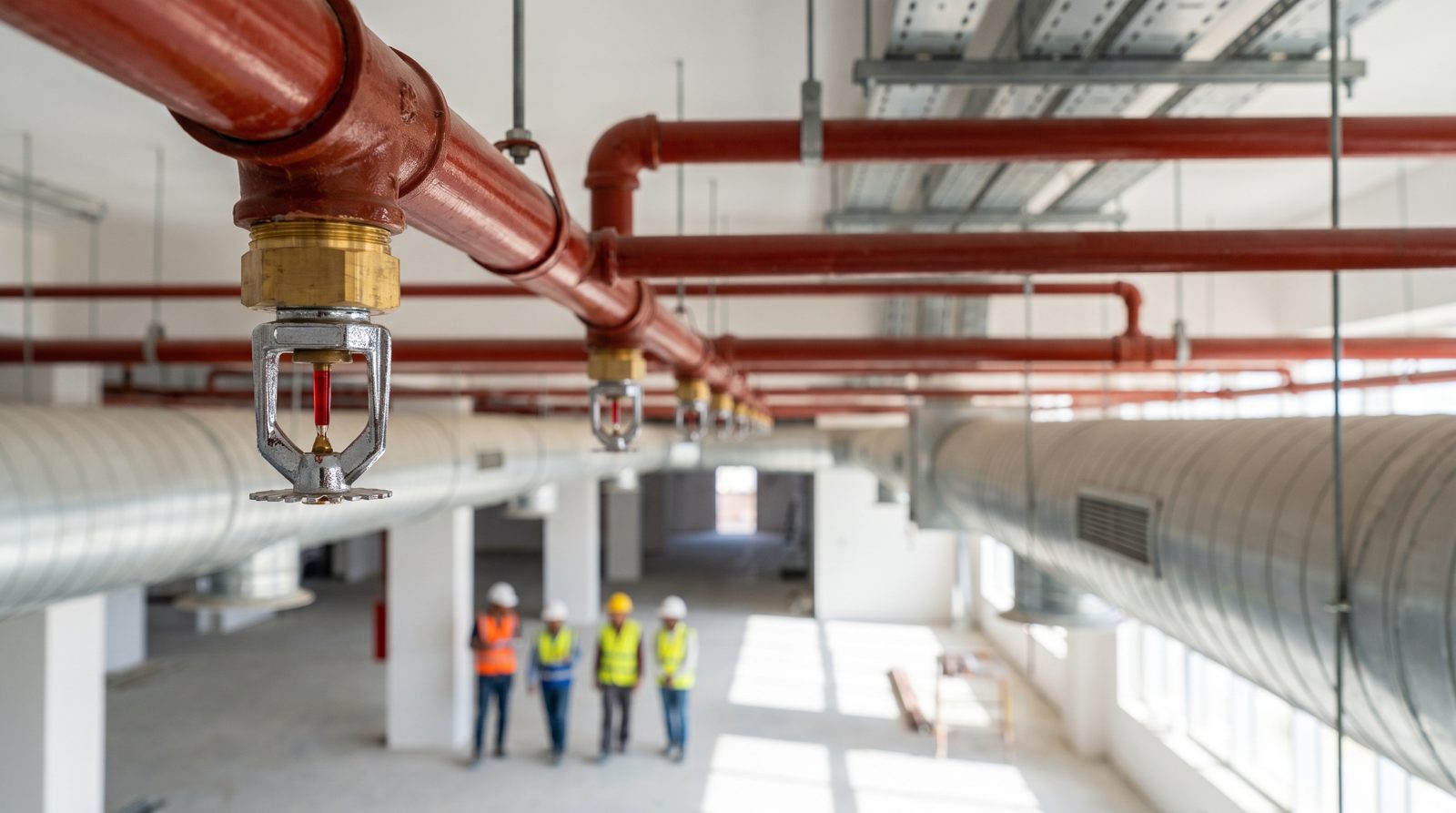
White Arch is a fire fighting contractor in Saudi Arabia for sprinkler systems (NFPA 13), standpipe and hose systems (NFPA 14), fire pumps (NFPA 20) and the water supply and alarm interfaces that make them work. The systems must also satisfy the Saudi Building Code, including SBC 801, the Saudi Fire Code, and pass Civil Defense review. We deliver NFPA-compliant fire fighting systems for commercial, institutional and industrial buildings as part of a single MEP contract.
Fire fighting contractor in Saudi Arabia: built to pass the test
A fire fighting contractor in Saudi Arabia is accountable for systems that sit idle for years and must then work the first time. The installed system has to match the approved hydraulic calculations, use listed components in their listed configuration, and survive acceptance testing witnessed by the consultant and the authority. A fire fighting contractor in Saudi Arabia that treats sprinkler pipe as ordinary plumbing will fail on exactly those points: wrong pipe schedule, unlisted hangers, heads placed under obstructions, or a pump that cannot reach its rated point on test day.
NFPA compliance is the trust signal that separates a qualified fire fighting contractor in Saudi Arabia from an informal labor team. We work as an NFPA compliant fire protection contractor in Saudi Arabia, and as the fire fighting contractor in Saudi Arabia that reads the consultant's design, the NFPA standards and the Saudi code together, raises conflicts before installation, and hands over a system with a complete record of tests. Our scope sits within our electrical and MEP services, so fire protection is coordinated with HVAC smoke control, electrical supplies and ceiling services by one team.
Codes and approvals that apply in Saudi Arabia
The Saudi Building Code (SBC 201 for general building requirements and SBC 801 for the fire code) decides where fire protection systems are required. The NFPA standards it references decide how they are designed, installed and tested. The General Directorate of Civil Defense reviews fire protection designs, inspects completed installations and issues the safety approvals needed before occupancy, and the submission route depends on the building category and region.
NFPA 13
Installation of sprinkler systems: hazard classification, sprinkler spacing and positioning, pipe sizing by hydraulic calculation, hangers, bracing and system test requirements.
NFPA 14
Standpipe and hose systems: Class I, II and III systems, hose connection locations in stairways, and minimum flow and residual pressure at the most remote outlets.
NFPA 20
Installation of stationary fire pumps: listed pumps, drivers and controllers, pump room arrangement, suction and discharge piping, and field acceptance testing.
NFPA 72
National Fire Alarm and Signaling Code: how water flow, valve supervisory and fire pump signals are monitored by the fire alarm system.
NFPA 22 and NFPA 24
Water tanks for private fire protection, and private fire service mains and their appurtenances, including underground mains and hydrants.
NFPA 25
Inspection, testing and maintenance of water-based systems, which sets the baseline records an owner needs at handover.
Editions matter: Civil Defense and the consultant define the edition that applies, and we build to it. The standards are published at nfpa.org.
What the data says about sprinkler performance
The strongest argument for a correctly installed system is operating experience. NFPA's report on US experience with sprinklers, covering 2015 to 2019, found the following (NFPA, US Experience with Sprinklers; NFPA Journal summary).
| Finding | Figure |
|---|---|
| Sprinklers operating when present in fires large enough to activate them | 92% |
| Sprinklers effective in controlling the fire, where they operated | 96% |
| Fires in which sprinklers operated and were effective, as a share of fires large enough to operate them | 88% |
| Sprinkler fires where only one sprinkler operated | 77% |
| Sprinkler fires where five or fewer sprinklers operated | 97% |
| Reduction in civilian death rate per 1,000 home fires where sprinklers were present | 89% |
These are US figures. They show what installed, supervised and maintained systems achieve, and the main reason they fail to operate is shutoff of the system before the fire, which is why valve supervision and impairment control matter as much as installation.
NFPA compliant fire protection contractor in Saudi Arabia: design basis and hydraulics
An NFPA compliant fire protection contractor in Saudi Arabia builds from a design basis that depends on the hazard class. NFPA 13 sets the sprinkler density to be delivered over a design area, plus a hose stream allowance and a water supply duration. The table lists indicative values for common hazard classes, converted to metric.
| Hazard class | Density over design area | Hose stream allowance | Water supply duration |
|---|---|---|---|
| Light hazard | 0.10 gpm/ft² (about 4.1 mm/min) over 1,500 ft² (139 m²) | 100 gpm in total | 30 to 60 minutes |
| Ordinary hazard, group 1 | 0.15 gpm/ft² (about 6.1 mm/min) over 1,500 ft² | 250 gpm in total | 60 to 90 minutes |
| Ordinary hazard, group 2 | 0.20 gpm/ft² (about 8.1 mm/min) over 1,500 ft² | 250 gpm in total | 60 to 90 minutes |
| Extra hazard, group 1 | 0.30 gpm/ft² (about 12.2 mm/min) over 2,500 ft² (232 m²) | 500 gpm in total | 90 to 120 minutes |
| Extra hazard, group 2 | 0.40 gpm/ft² (about 16.3 mm/min) over 2,500 ft² | 500 gpm in total | 90 to 120 minutes |
Indicative values from the NFPA 13 density and area approach. The design point is chosen on the curve, and the edition named in the contract governs.
A worked example shows why the numbers drive pump selection. For an ordinary hazard group 2 area, 0.20 gpm/ft² over 1,500 ft² is 300 gpm at the sprinklers. Adding the 250 gpm hose stream allowance gives 550 gpm, or about 35 L/s. Fire pumps are supplied in listed sizes, and the next size above 500 gpm is 750 gpm, so a 550 gpm demand needs a 750 gpm pump, and the pump must hold its rated pressure out to 150% of that flow. Pipe sizes are confirmed by hydraulic calculation with the Hazen-Williams friction method, and as a fire sprinkler installation contractor in Riyadh we check the calculation against the installed routing, because added fittings, changed elevations or a relocated riser can move the demand point.
Sprinkler temperature rating matters in a hot climate. NFPA 13 ties the head rating to the maximum ceiling temperature, so roof voids, plant rooms and kitchens that run hot need higher-rated heads than a conditioned office ceiling.
| Head temperature rating | Color of the liquid bulb | Maximum ceiling temperature (NFPA 13 basis) |
|---|---|---|
| 57 °C (135 °F) | Orange | Ordinary rating, up to 38 °C (100 °F) |
| 68 °C (155 °F) | Red | Ordinary rating, up to 38 °C (100 °F) |
| 79 °C (175 °F) | Yellow | Intermediate rating, up to 66 °C (150 °F) |
| 93 °C (200 °F) | Green | Intermediate rating, up to 66 °C (150 °F) |
| 141 °C (286 °F) | Blue | High rating, up to 107 °C (225 °F) |
Confirm against the NFPA 13 edition in force. Coordinated shop drawings resolve clashes with ducts, cable trays and ceilings before pipe is cut, and our solutions describe the wider approach.
Fire protection systems we install
As a fire fighting system installation company in Dammam, we install the systems below, and the same scopes apply across the Kingdom.
Wet pipe sprinkler systems
The standard choice for conditioned buildings: offices, malls, hotels, hospitals and education campuses.
Preaction and deluge systems
Preaction for data halls, archives and other areas where accidental discharge is costly, as on our data center MEP page, and deluge for high-hazard process areas and transformer protection.
Standpipe and hose systems
Wet or dry risers with hose connections in protected stairways and hose reels where the code or the consultant requires them.
Fire pump rooms
Electric and diesel fire pumps, jockey pumps, listed controllers, test headers or flow meters, and pump room ventilation and drainage.
Fire water storage and yard mains
Tank connections, underground mains, hydrants and fire department connections.
Alarm and control interfaces
Flow switches, tamper switches, pressure switches and pump controller signals coordinated with the fire alarm system, plus HVAC shutdown and smoke control interfaces.
Fire alarm and fire fighting contractor in Dammam
As a fire fighting system installation company in Dammam, we see the same pattern on every job. For projects that need a fire alarm and fire fighting contractor in Dammam, the interfaces matter as much as the pipework. As a fire alarm and fire fighting contractor in Dammam, we make sure every flow switch, valve tamper switch and pump alarm reports correctly to the fire alarm panel before Civil Defense inspection. Our HVAC contractor in Dammam and MEP contractor in Dammam pages describe the regional scope, and the smoke control and shutdown sequences are tested together with the HVAC systems.
Fire pump room installation contractor in Saudi Arabia: NFPA 20
The fire pump room is where most acceptance problems surface. As a fire pump room installation contractor in Saudi Arabia, we build to NFPA 20, which requires listed fire pumps, drivers and controllers and sets the performance every centrifugal fire pump must demonstrate on test.
| NFPA 20 requirement | What it means on site |
|---|---|
| At least 150% of rated flow at not less than 65% of rated pressure | The pump must hold usable pressure well beyond its rated point, verified on the field acceptance test |
| Shutoff (churn) pressure not more than 140% of rated pressure | System components must be rated for churn pressure plus the maximum suction pressure |
| Listed controller and driver | Electric controllers and diesel engines are listed for fire pump service, not general-purpose equipment |
| Jockey (pressure maintenance) pump | Holds system pressure against small leakage so the main pump only starts on a real demand |
| Protected pump room | Fire-rated enclosure, ventilation, drainage and access as set by NFPA 20 and the building code |

We also check the supply side: tank effective capacity, suction piping arrangement and the available pressure at the pump inlet. In Saudi summer conditions, diesel engine cooling and pump room ventilation need particular attention so the driver can run at full load during testing and in a real event. Tall buildings add a pressure issue: NFPA 14 calls for 500 gpm at 100 psi (6.9 bar) residual at the most remote 2.5 in hose connection of the first standpipe, and for pressure-regulating devices where static pressure at a hose connection exceeds 175 psi (12.1 bar) (Fire Engineering, standpipe guidance). Our tower pressure table on the MEP contractor in Riyadh page shows how static pressure builds with height.
Fire sprinkler installation contractor in Riyadh
As a fire sprinkler installation contractor in Riyadh, we mobilize a dedicated site team from our Dammam headquarters, and the regional scope is on our HVAC contractor in Riyadh and MEP contractor in Riyadh pages. The system type follows the building, as the table shows.
| Building type | Typical system | What we plan for |
|---|---|---|
| Commercial tower | Wet pipe sprinklers, standpipes and pressure zoning | Riser sequencing, pressure-regulating devices and pump capacity |
| Mall and retail | Wet pipe sprinklers with large common areas | Night work, tenant fit-out connections and impairment control |
| Hospital | Wet pipe sprinklers with sealed ceilings | Infection control during works, as on our hospital and cleanroom page |
| Data hall | Preaction sprinklers or clean agent | Accidental discharge risk and cooling shutdown interface |
| Industrial plant | Deluge, foam or water spray | High-hazard density and yard mains |
Fire protection system contractor in the Eastern Province
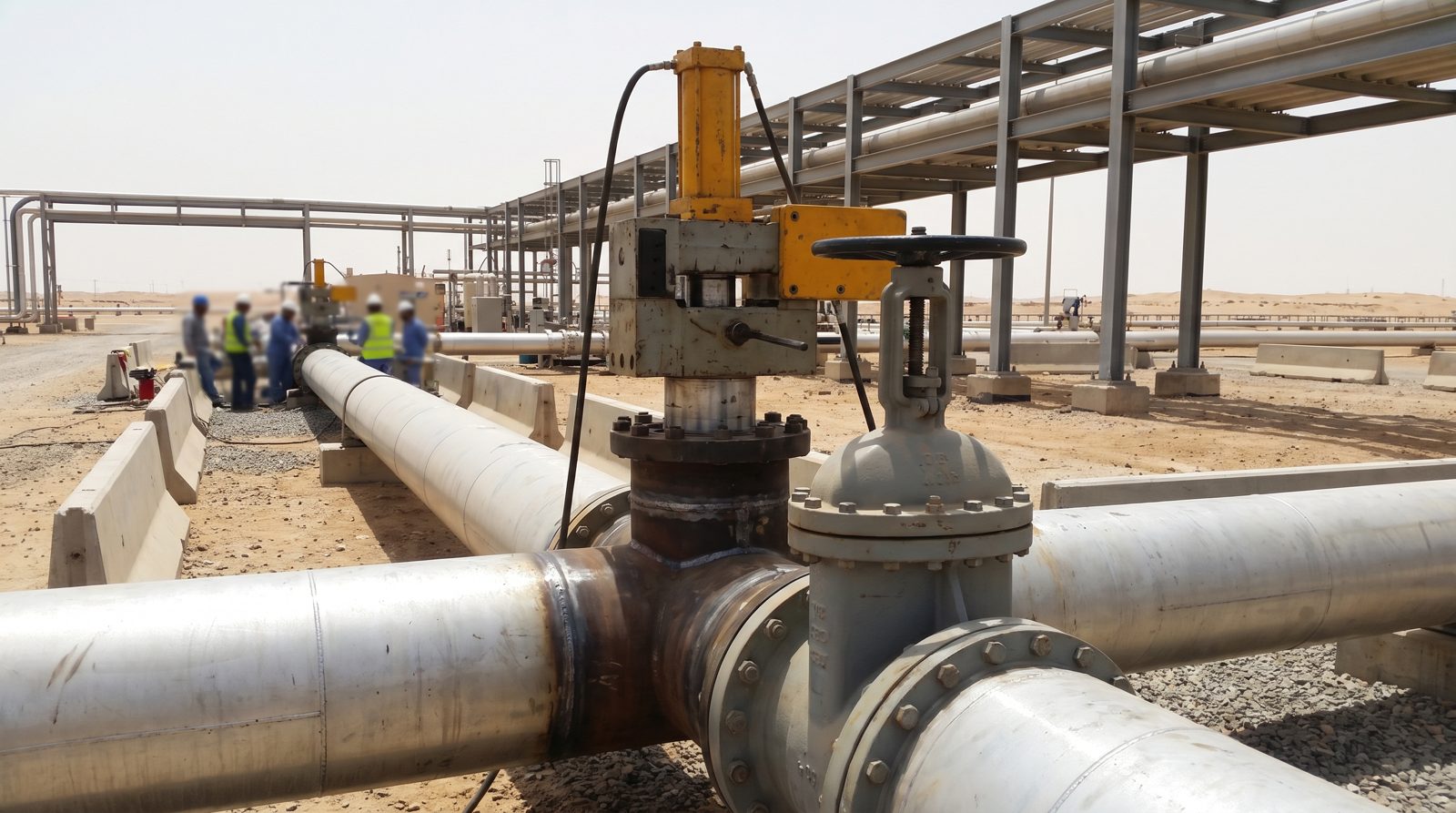
As a fire protection system contractor in the Eastern Province, we work from Dammam across Al Khobar, Dhahran and the Jubail industrial corridor, where yard mains, deluge systems and fire pump houses protect plant that cannot easily be shut down. As a fire fighting system installation company in Dammam, we treat the fire water network as one system, from tank and pumps to yard mains and risers, and we test it as one.
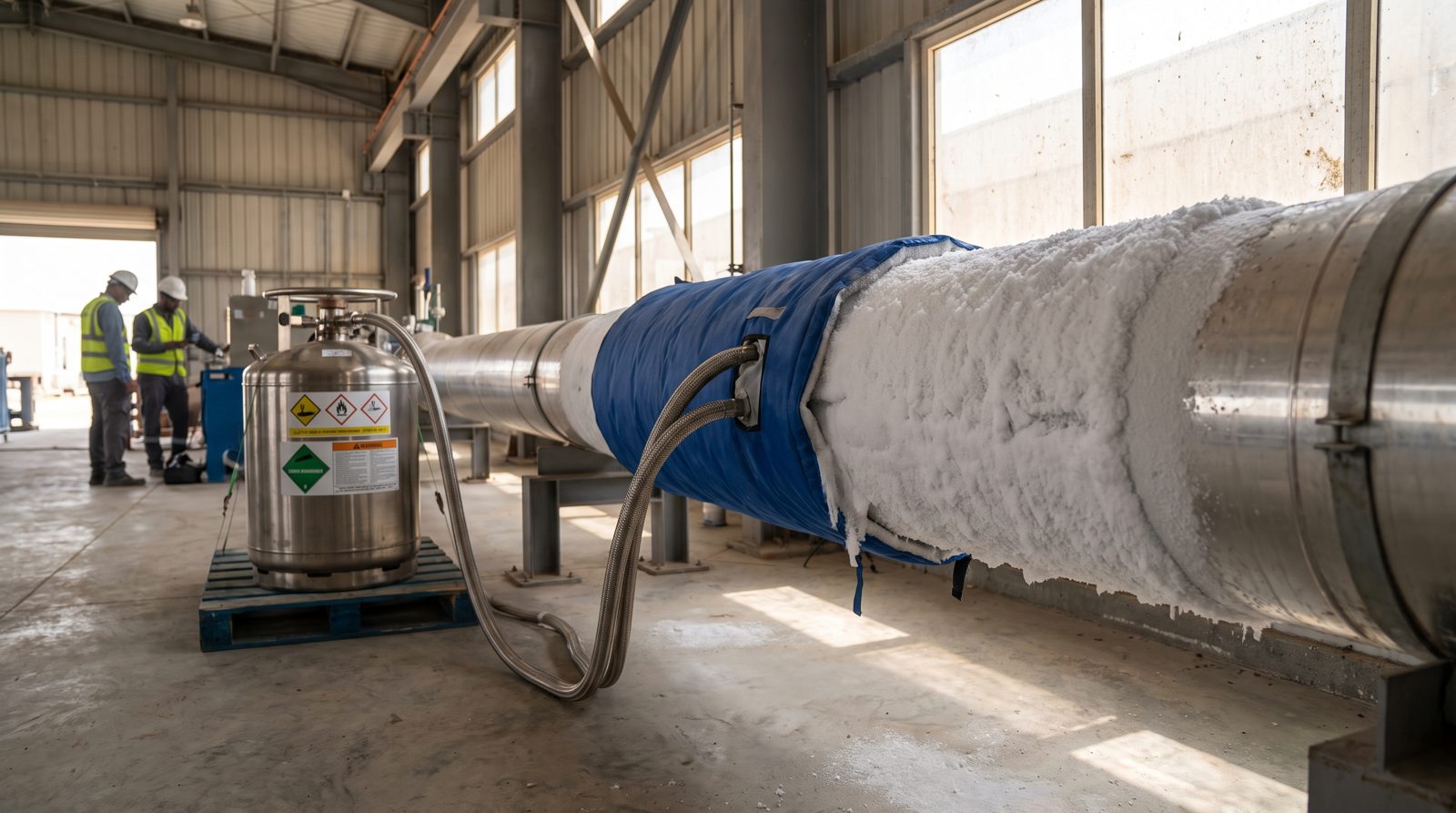
Live work on fire mains is routine in these facilities. Fire line work follows NFPA 25, which sets an impairment procedure with a designated coordinator, tagging and notification for taking water-based protection out of service. We limit the area and duration of each impairment with pipe freezing and hot tapping, and our guide to pipe freezing vs draining the system compares the options on downtime and risk.
Testing and commissioning
Hydrostatic testing
New sprinkler piping is tested at 200 psi (13.8 bar) for 2 hours, or 50 psi (3.4 bar) above the maximum working pressure where that exceeds 150 psi (10.3 bar), per NFPA 13.
Flushing
Underground and lead-in mains are flushed before connection to overhead piping, so debris does not lodge in sprinkler branch lines.
Main drain and inspector's tests
Confirm the water supply and that flow switches raise an alarm within the required time.
Fire pump field acceptance test
Flow testing at churn, rated flow and 150% of rated flow, with controller and alarm functions demonstrated in front of the consultant and witnesses.
Integrated testing and handover
Fire alarm interfaces, HVAC shutdown and smoke control sequences tested together, followed by as-built drawings, material and test certificates and the documentation Civil Defense and the owner require.
How we deliver fire fighting projects
Survey operating conditions
Review the approved design, hazard classification, water supply and, in occupied buildings, which systems must remain in service during works.
Coordinate the interfaces
Shop drawings, hydraulic calculation checks, material submittals of listed components and method statements.
Install with QA/QC
Pipe, hangers, bracing and sprinkler positioning inspected against NFPA 13 and the approved drawings at every hold point.
Commission and hand over
Hydrostatic, flow and pump acceptance tests, alarm interface testing and records prepared for Civil Defense inspection.
Our standards page describes the quality framework, and our markets page lists the sectors we serve.
Why clients choose White Arch
As a fire fighting contractor in Saudi Arabia, a fire sprinkler installation contractor in Riyadh and a fire fighting system installation company in Dammam, we are one accountable contractor for mechanical, electrical and specialist scopes, with submittals, QA/QC and documented handover. Learn more about White Arch, browse our services or read our technical articles.
Frequently asked questions
Which NFPA standards apply to fire fighting systems in Saudi Arabia?
The core references are NFPA 13 for sprinklers, NFPA 14 for standpipes, NFPA 20 for fire pumps, NFPA 72 for fire alarm signaling and NFPA 25 for inspection and testing, applied through the Saudi Building Code and SBC 801.
What is SBC 801?
SBC 801 is the Saudi Fire Code, part of the Saudi Building Code, which sets fire safety requirements for buildings and references NFPA standards for the design and installation of fire protection systems.
Is White Arch a fire fighting contractor in Saudi Arabia?
Yes. White Arch works as a fire fighting contractor in Saudi Arabia, installing sprinklers, standpipes, fire pump rooms and fire water networks, and handing over test records for Civil Defense review.
Is White Arch an NFPA compliant fire protection contractor in Saudi Arabia?
Yes. White Arch works as an NFPA compliant fire protection contractor in Saudi Arabia, building to the NFPA editions named in the contract documents and the approved hydraulic calculations.
What is the acceptance test for a fire pump?
Under NFPA 20 the pump is flow tested at churn, rated flow and 150% of rated flow, must deliver at least 65% of rated pressure at 150% flow, and its churn pressure must not exceed 140% of rated pressure.
Does White Arch work as a fire pump room installation contractor in Saudi Arabia?
Yes. White Arch works as a fire pump room installation contractor in Saudi Arabia, covering listed pumps, drivers and controllers, suction and discharge piping, ventilation, drainage and the field acceptance test.
What hydrostatic test pressure is used for sprinkler piping?
NFPA 13 requires new sprinkler piping to be tested at 200 psi (13.8 bar) for 2 hours, or 50 psi above the maximum working pressure where that is above 150 psi.
Does White Arch work as a fire sprinkler installation contractor in Riyadh?
Yes. White Arch is headquartered in Dammam and mobilizes a dedicated site team to work as a fire sprinkler installation contractor in Riyadh and other regions of the Kingdom.
Is White Arch a fire fighting system installation company in Dammam?
Yes. White Arch is a fire fighting system installation company in Dammam, headquartered there, and serves the Eastern Province and the Kingdom.
Does White Arch work as a fire protection system contractor in the Eastern Province?
Yes. White Arch works as a fire protection system contractor in the Eastern Province, including Dammam, Al Khobar, Dhahran and the Jubail corridor.
Does White Arch work as a fire alarm and fire fighting contractor in Dammam?
Yes. White Arch works as a fire alarm and fire fighting contractor in Dammam, coordinating flow, tamper and pump signals with the fire alarm panel before Civil Defense inspection.
Who approves fire fighting systems in Saudi Arabia?
The General Directorate of Civil Defense reviews fire protection designs and inspects completed installations before issuing the safety approvals needed for occupancy, alongside the project consultant's acceptance.
Need an NFPA-compliant fire fighting scope planned and delivered?
Send us your scope, drawings or site details. We will review them and respond with a coordinated proposal.
Request proposal WhatsApp +966 57 048 3020Email info@whitearch.sa